Carpets, Household Dust and Everyday Cleaning
Carpets, Household Dust and Everyday Cleaning
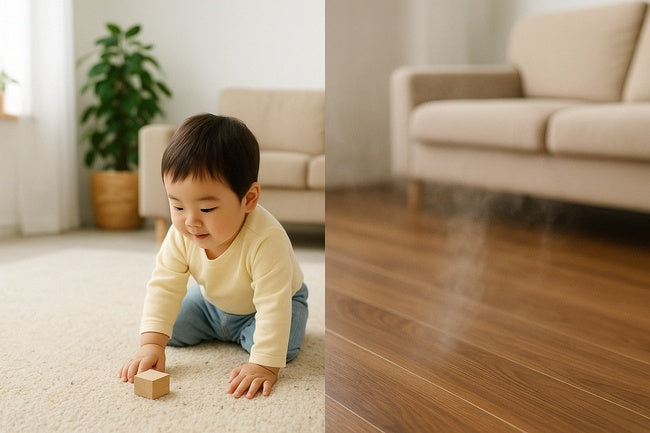
Does a carpet simply collect dust, or can it help keep settled particles from being stirred into the air? Both the flooring and the way it is maintained matter. Here is a closer look at the research behind the claim, and what it means when choosing a rug for your home.
What Is Household Dust?

Household dust is a mixture of particles from everyday life. It can include textile fibres, hair, soil, pollen, pet dander and material from dust mites. Some of these particles contain allergens. Dust may settle on surfaces or become airborne when people move around or clean.

How Carpet Holds Settled Dust
Carpet pile can retain particles until they are removed by cleaning. The US Environmental Protection Agency explains that a well-maintained carpet can trap particles, while poorly maintained carpet can accumulate dust and release it during everyday activity. A rug is therefore not a substitute for cleaning.

What the Laboratory Tests Found
The Japan Carpet Manufacturers Association's 2019 technical report describes controlled tests comparing carpet with wood flooring. In a 2013 test using standardised dust and a tapping machine, airborne particle counts above nylon carpet samples were about 10–20% of those above the wood sample. A later test reported roughly one-sixth to one-twelfth under its particular conditions.
These findings explain the often-quoted “one-tenth” figure. They are results for specific materials, dust and test conditions, not a promise that every rug will reduce dust by the same amount in a lived-in room. The tests do not establish that our Gabbeh rugs prevent allergies.
Source: Japan Carpet Manufacturers Association, Technical Research Report 2 on dust resuspension.
Choosing for a Family Home

Consider how the room is used, who will clean it and how easily the rug can be maintained. For a household affected by asthma or allergies, flooring choices should form part of an individual plan discussed with a healthcare professional. A comfortable rug should not be presented as a treatment.
Make Cleaning Part of the Routine

The EPA recommends vacuuming carpets and furniture at least weekly, and more often where needed, along with damp dusting of surfaces. People with asthma or allergies should avoid the area while it is being vacuumed because cleaning can stir particles into the air.
Follow the care instructions for your particular rug and vacuum. Give regularly used areas extra attention, and choose a cleaning routine you can maintain. The beauty and texture of a wool rug are best enjoyed alongside consistent care.
A Comfortable Room, Cared for Well

A rug brings colour, texture and a welcoming place to sit into the home. Research into dust retention adds useful context, but the practical message is straightforward: choose a rug you enjoy, keep it clean and consider the needs of the people using the room.
The illustrations show the themes discussed in this article; they are not measurements or demonstrations of a health benefit.
Further reading: EPA guidance on carpets and indoor air quality and sources of indoor particulate matter.